
Meeting to coordinate the volumes of goods carried in international traffic
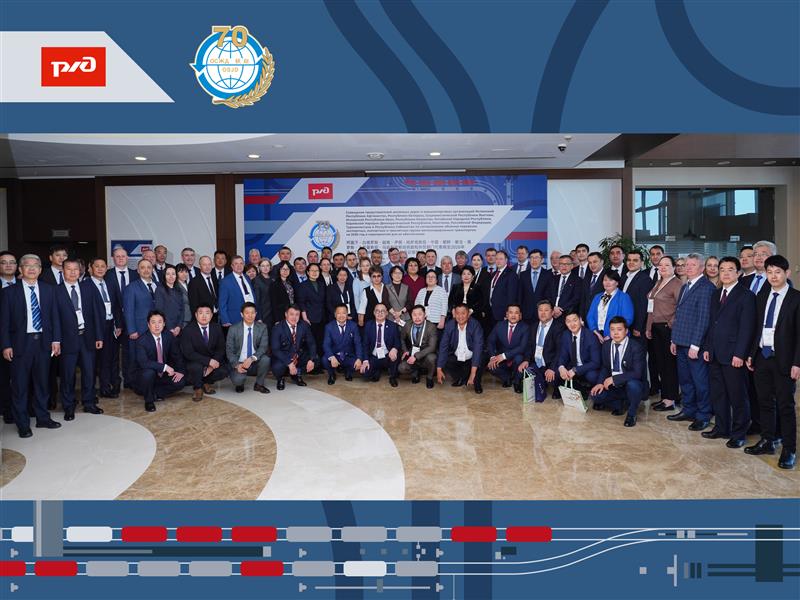
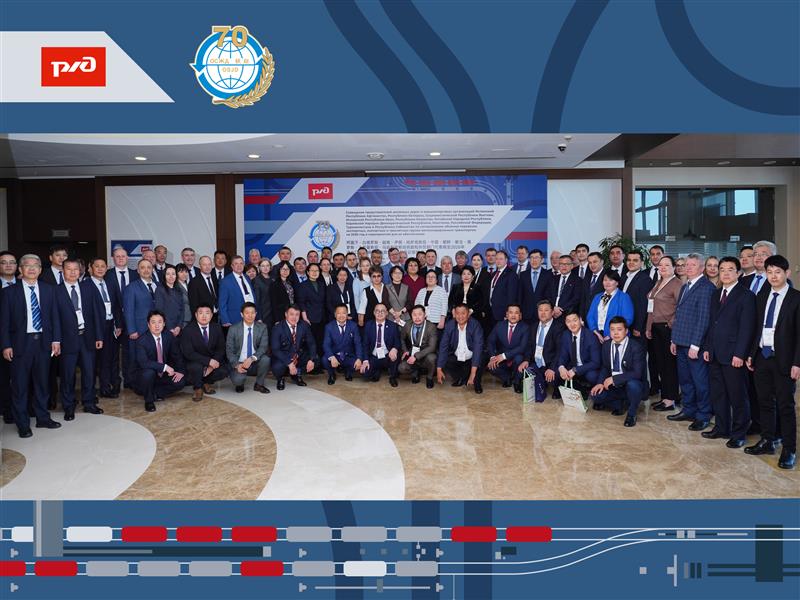
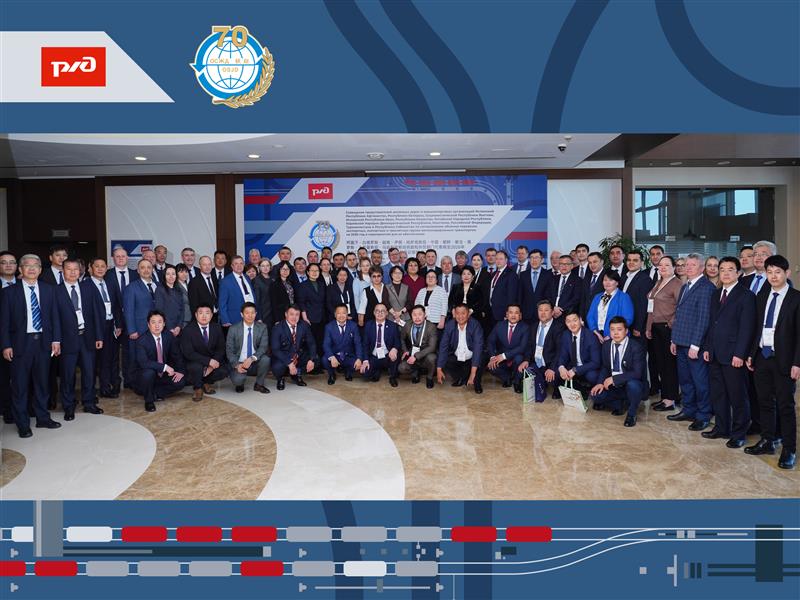
In accord with the Work Plan of the OSJD Commission on Freight Traffic for 2026, meeting of the representatives of railways and foreign trade organisations from the Islamic Republic of Afghanistan, Republic of Belarus, Socialist Republic of Vietnam, Islamic Republic of Iran, Republic of Kazakhstan, People’s Republic of China, Democratic People’s Republic of Korea, Mongolia, Russian Federation, Turkmenistan and Uzbekistan was held in Sochi (Russian Federation) on the subject of “Coordination of the volumes of export, import and transit goods carried in international traffic and the measures to be taken to ensure them” on 9-13 March 2026.
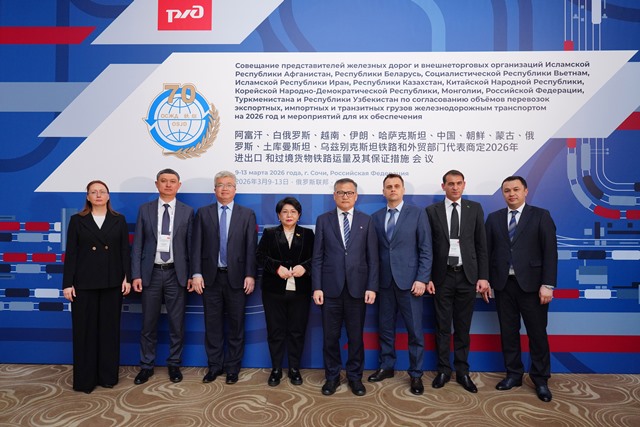
The meeting was attended by the representatives of the OSJD railways and foreign trade organisations from the following countries: Islamic Republic of Afghanistan, Republic of Belarus, Socialist Republic of Vietnam, Republic of Kazakhstan, People’s Republic of China, Democratic People’s Republic of Korea, Mongolia, Russian Federation, Turkmenistan, Republic of Uzbekistan, as well as by the representatives of the Korea Railroad Corporation (KORAIL), UTLC ERA JSC – an OSJD affiliated enterprise, International Coordinating Council on Trans-Eurasian Transportation (CCTT) and of the OSJD Committee.
The meeting participants were welcomed by Sergey Pavlov, First Deputy General Director of the RZD OJSC, and Sergey Zadorin, Head of the North Caucasus Railway, a branch of the RZD OJSC, who expressed their gratitude to all the delegations for their participation in the meeting to coordinate the volumes of export, import, and transit goods carried by rail, as well as provided a brief overview of the RZD OJSC’s activities in the field of international freight traffic.
The meeting agenda included the following items:
1 - summing up of the totals of the volumes of goods carried in 2025;
2 - coordination of the volumes of goods to be carried in export, import and transit traffic for 2026 with their distribution by quarters and types of goods for each border crossing point;
3 - development of technical and organisational measures for ensuring the transportation of approved volumes in the international freight traffic in 2025;
4 - proposals of railways;
5 - agreeing on the date and venue of the next meeting in 2026;
6 - miscellaneous.
Thirteen Subgroups, the composition and assignments of which were agreed upon by the delegations at the meeting, conducted their work to consider the first four items of the meeting agenda.
The delegations of the Islamic Republic of Afghanistan, Republic of Belarus, Socialist Republic of Vietnam, Republic of Kazakhstan, People’s Republic of China, Democratic People’s Republic of Korea, Mongolia, Russian Federation, Turkmenistan and Republic of Uzbekistan informed each other about their performances regarding the transportation volumes of foreign trade goods between the countries and about organisational and technical measures taken to ensure them.
The Parties have agreed on the volumes of export, import and transit goods to be carried in 2026 with their distribution by quarters, be each border crossing point and by types of goods.
In order to ensure proper identification of the titles of goods during coordination of the monthly plans for the transportation of goods, the Parties agreed on the nomenclature of export, import and transit goods. The Parties also agreed that when signing contracts for the supply of goods in excess of the freight volumes agreed for 2026, the possibility of their transportation will be examined and approved during coordination of monthly operational plans, based on the throughput capacity of border crossing points.
The Parties also agreed that “The transportation of goods in containers” in the reporting and planned years will be measured also in 20-foot equivalent units (TEU), with both loaded and empty containers taken into account.
The organisational and technical measures aimed at ensuring the transportation of the agreed volumes of goods planned in export, import and transit traffic for 2026 have been coordinated.
The Parties underlined the need to continue working towards reducing the idling time of wagons and locomotives spent at border stations by doing the following:
- assuring compliance with the SMGS Agreement and SI to SMGS;
- achieving greater uniformity in transportation of foreign goods (except for seasonal goods) throughout the year, quarters and months;
- assuring timely formation of trains and their departure strictly in line with the agreed traffic schedules;
- expediting the turnover of locomotives and wagons;
- routing of bulky freight transport (coal, coke, crude oil, oil products, metal ore, fertilisers, timber and other);
- taking steps to eliminate disconnection of container trains wherever possible;
- timely cleaning of empty wagons after unloading and expediting their return to their own railways;
- improving the technology and procedures of train handover in international traffic in full compliance with the requirements of the SMGS Agreement, SI to SMGS and PGW Rules;
- improving the systems of mutual information exchange between neighbouring railways on the presence and approach of goods and wagons to border stations;
- taking necessary steps to improve the technical condition of freight wagons, preventing the dispatch of goods in wagons that do not meet the PGW technical requirements.
To avoid extended stoppage of wagons at the border stations when goods are transported on transit railways, column 23 of the SMGS consignment note must contain the name of the payer for each of the carriers.
The Parties noted the importance of maintaining a coordinated transport policy when organising international transport under existing agreements and contracts, and also agreed to continue working with consignors and freight forwarders to ensure that that the transportation documents are filled in correctly.
For smooth unimpeded handover of trains with foreign trade goods at border crossings, the Parties shall make monthly plans for transportation of goods. Railways management shall submit information on monthly volumes of international goods transportation for coordination by telegrams or e-mail. This data arranged according to the established nomenclature of goods shall be presented no later than 10 days prior to the beginning of a planning month.
Responses on the approved volumes of goods shall be communicated within three working days after receiving a request.
Such telegrams on the volumes of goods to be carried in international traffic are to specify the country of departure, the country of destination, names of border stations, the title of the goods, tonnage, the number of wagons or containers (with indication of dimensions in feet and type of container).
In addition, to coordinate the transportation of goods to the third countries, the names of carriers used on European railways must be specified in accordance with Annex 5 “Information Guide” to the SMGS Agreement, names of destination stations and freight forwarders that pay for transit.
The goods which were not included in a plan for transportation through the border stations, as well as the goods presented for transportation under additional contracts, can be accepted for transportation only after receiving consent for their acceptance from the railways involved in the transportation process.
When additional quantities of goods are coordinated, border railways and stations shall be simultaneously informed about an increase of the respective average daily rate of goods handover by nomenclature and in tons.
The carrier that accepted a request for the carriage of goods is to have it approved according to the established procedure. Carriers are to respond within three working days after receiving a request for transportation.
The Parties will make every effort to organise prompt collaboration in terms of removing obstacles affecting regular transportation.
Border stations are to ensure smooth acceptance of goods within the agreed monthly volumes and additional requests for carriage of some goods, as well as prevent unjustified refusal to accept the agreed volumes of goods. Goods which have been loaded according to the plan of the previous month but arrived at border stations in the following month shall be accepted unrestrictedly.
The Parties will take steps to dispatch freezable goods mainly in the second and third quarters and shall inform their consignors of the need to prevent goods from freezing in winter. Crude oil and viscous petroleum products should be transported in tanks with bottom drain valves.
The Parties shall take all necessary measures to comply with the SMGS requirements concerning proper execution of transportation documents, preparation of tare, packing, marking, compliance with the rules of loading and fastening of freight, wagon and container sealing, etc. They must also ensure that the numbers of seals and seal symbols in the transportation documents the numbers and symbols of seals on wagons and containers.
All parties shall make sure that when they carry dangerous goods, they fulfil all the SMGS requirements for documenting such a transport according to the “Rules for the Carriage of Dangerous Goods” (Annex 2 to the SMGS). They shall also ensure that wagons, containers and cargoes are properly labelled with hazard signs and markings.
The Parties will send a request to the foreign trade organisations in the of the Islamic Republic of Afghanistan, Republic of Belarus, Socialist Republic of Vietnam, Islamic Republic of Iran, Republic of Kazakhstan, People’s Republic of China, DPRK, Mongolia, Russian Federation, Turkmenistan and the Republic of Uzbekistan, which send goods with transshipment, to stipulate a contractual obligation to use tare and packaging that will protect the safety of goods during transportation and transshipment. They will also be asked to bundle goods that do not require expert examination during transshipment.
The Parties shell maximise the use of containers in freight transportation in order to speed up the transshipment and ensure the safety of goods.
In the event of accumulation of wagons with exported goods (including containerised goods) near borders, the central railway authorities, neighbour railways and border stations shall act together to improve collaboration and increase the daily intake and handover of trains over and above the fixed level. At the same time, a receiving railway shall provide a necessary number of empty wagons (including flat wagons) for loading at a border station to increase the efficiency and volume of transhipment.
The Parties have also agreed as follows:
- to inform foreign trade organisations and freight forwarders (operators) about newly introduced amendments and additions to the SMGS Agreement and SI to SMGS;
- to carry out coordinating works with the organisations participating in the transportation process (rolling stock operators, freight forwarders, consignors, etc.) to explore logistic solutions that reduce empty wagon mileage in order to optimise rolling stock utilisation;
- to inform each other in advance about the introduction or lifting of restrictive measures imposed by the state authorities in order to ensure unimpeded transfer of goods across borders;
- to inform all meeting participants in a timely manner about changes in tariff policy for long-term and monthly planning purposes;
- the importance of digital planning of foreign trade freight traffic volumes using electronic data exchange and the application of information technologies was noted;
- it has been also noted that the requirements of item 10.30 of the SI to SMGS are to be fulfilled: “if a portion of goods accompanied with the reconsignment invoice sheet, arrived at the station before the major portion that was transported together with the consignment note, then the transferring carrier shall hold up the reconsigned portion and hand over it together with the major portion after its arrival”.
In order to ensure timely and high-quality satisfaction of freight forwarders’ transportation needs, improve rolling stock utilization, and enhance border crossing operations, the Parties deemed it necessary to implement a number of specific measures to optimize the freight traffic in 2026.
The delegation of the RZD OJSC noted the importance of implementing the Agreement on the Carriage of Containers as Part of Container Trains in International Traffic, elaborated within the framework of the OSJD, which entered into force on 1 January 2022, and addressed the China State Railway Group Со., Ltd. (KZD) and the Ulan-Bator Railway JSC (UBZD) with a request to accede to it.
The meeting participants noted the importance of holding a meeting of the representatives of railways and foreign trade organisations on the subject of “Coordination of the volumes of export, import and transit goods carried in international traffic and the measures to be taken to ensure them” in an intramural mode due to the wide range of issues under consideration and to ensure a synchronized work of the delegations from the countries with different time zones. The meeting participants also proposed holding regular meetings of the representatives of railways and foreign trade organisations to coordinate the volumes of export, import, and transit goods carried by rail and measures to ensure them, in alphabetical order, beginning with the Russian Federation in 2026.
The meeting chairman expressed his gratitude and appreciation to the delegations of railways from the OSJD member countries and the meeting participants for their highly professional work in reviewing the agenda items and taking agreed decisions. The meeting participants also expressed their gratitude to the RZD OJSC for the high level of organisation of the meeting.